Fomoed – Trading Dashboard
Web 3
2025
Product Designer
Overview
Unified Command Center for Web3 Traders
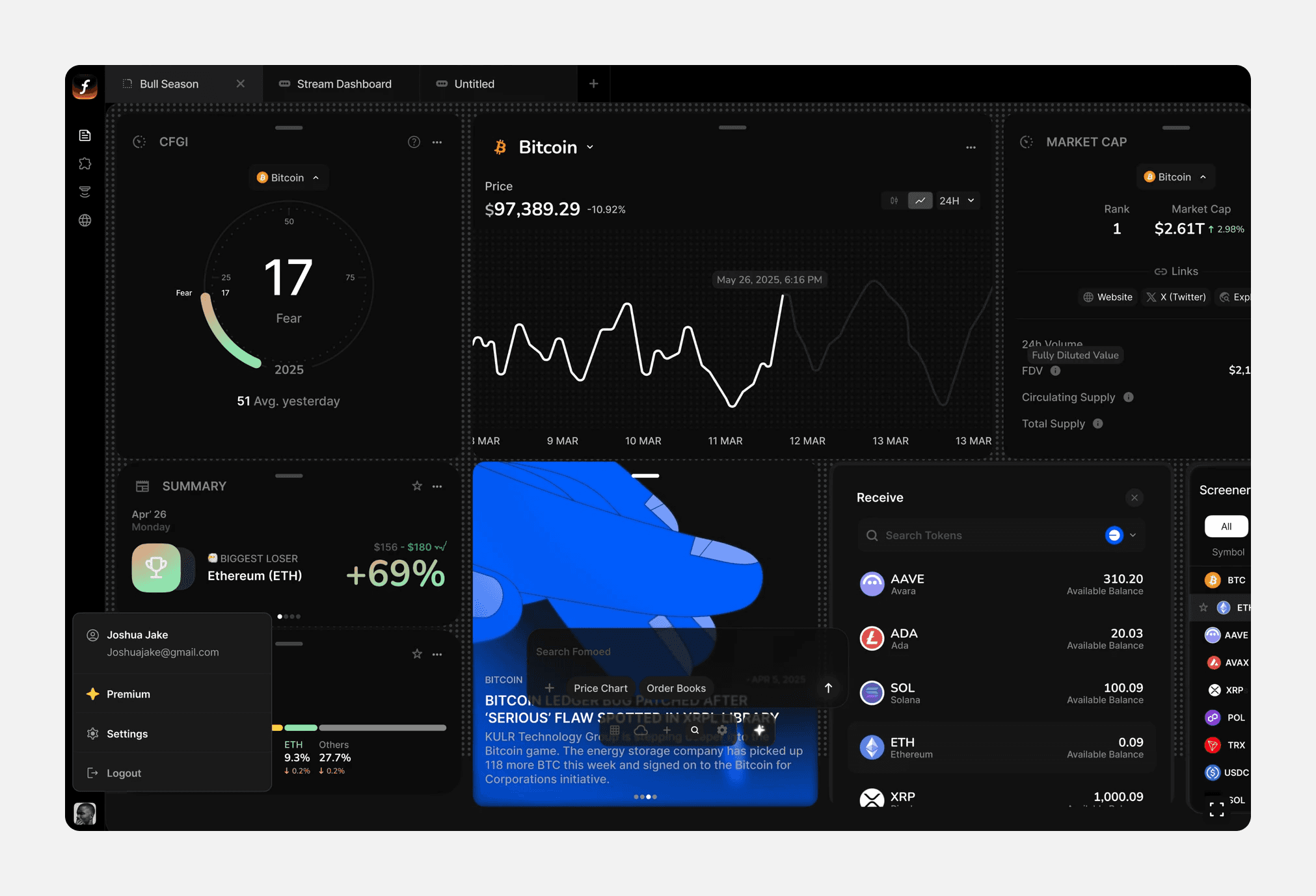
Fomoed is a Web3-native trading and market insights platform built for retail and institutional crypto traders. The platform’s goal is to help users make smarter decisions by aggregating key market signals like candlestick charts, trending assets, volume spikes, and social sentiment. Into one powerful dashboard.
The Problem
Fragmented Trading Workflow
Retail crypto traders often rely on multiple platforms to gather insights, track tokens, monitor sentiment, and execute trades. A typical trader might have several browser tabs open; one for charts, another for Twitter sentiment, one for price alerts, and yet another for market volume. This constant context switching made decision-making slow and error-prone, especially in fast-moving markets. There was also no easy way to teach or share effective trading setups with others. Each trader’s workflow was fragmented, personal, and nearly impossible to scale or replicate.
The Goal
How we could help
From the interviews and gathering more data we focused on the essential elements important to Traders, both new and experienced users, along with ease of use
User Goals
Create a personalized, consolidated view of the market.
Save and reuse preferred layouts for specific trading strategies.
Quickly dive from high-level insights → deep analytics in one click.
Share curated layouts with peers and communities.
Business Goals
Increase trader stickiness (session time, DAU).
Differentiate from TradingView/Glassnode by combining market data + sentiment + community signals.
Drive platform credibility with a scalable, widget-based system.
The Research
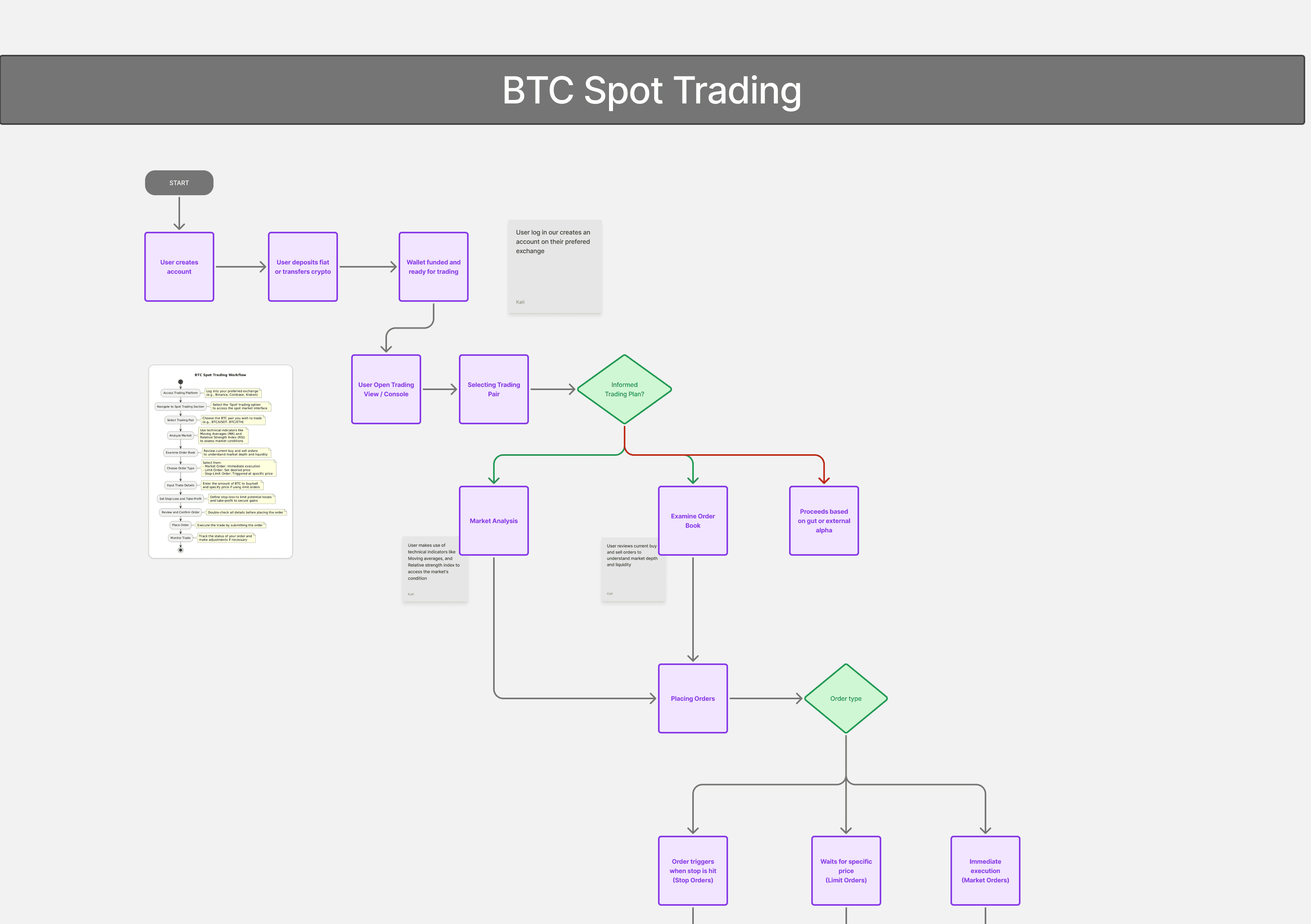
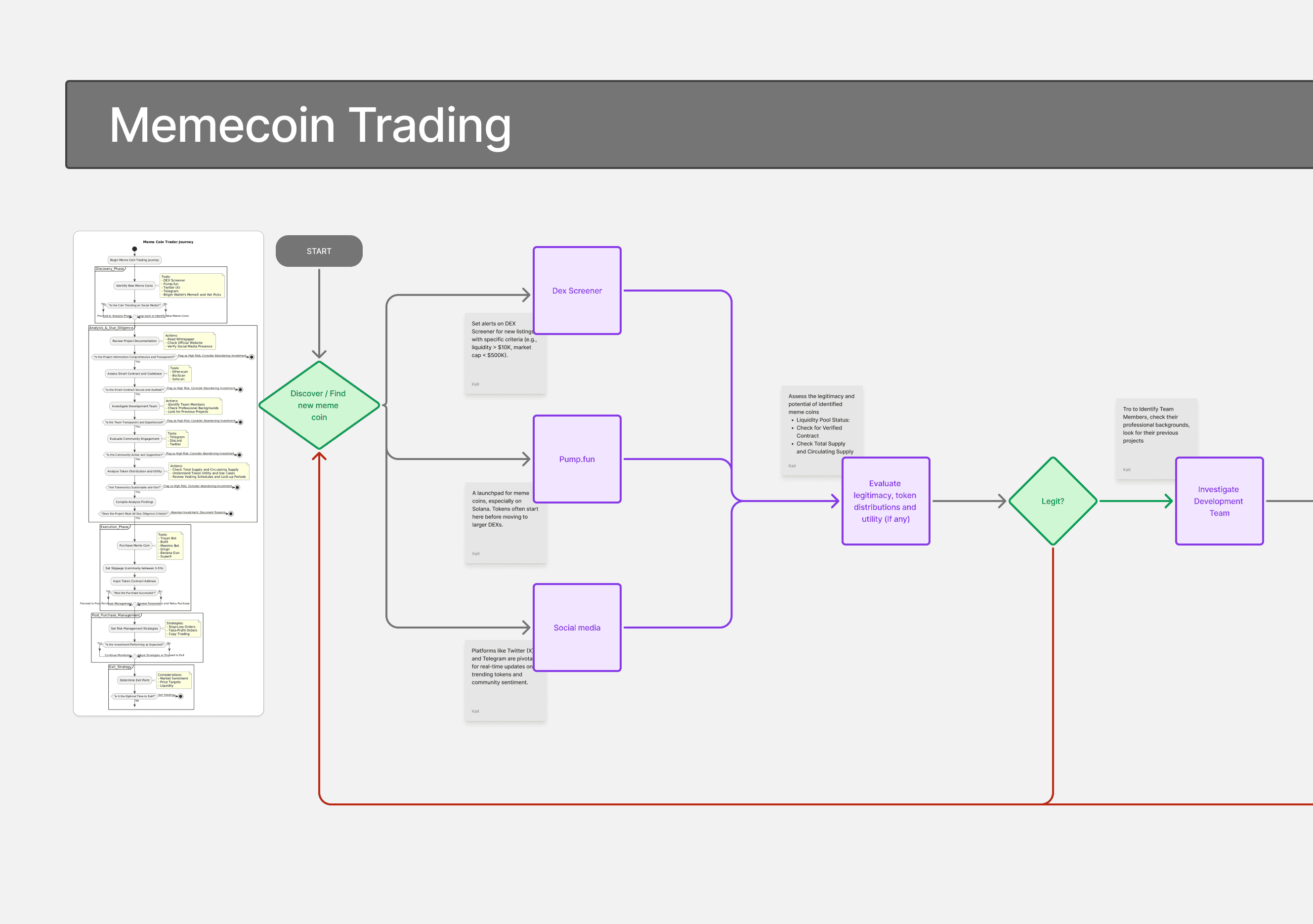
Learning the workflow for different traders
We interviewed 8 traders (SPOT and memcoin) to understand their workflows and the tools they currently use. Six mentioned relying on at least three different platforms simultaneously, while five said Telegram and Twitter were essential for sentiment but too chaotic, along with tools like TradingView, Nansen, Dune and more for competitive analyisi
Design Solution
An all on one Trading Dashboard
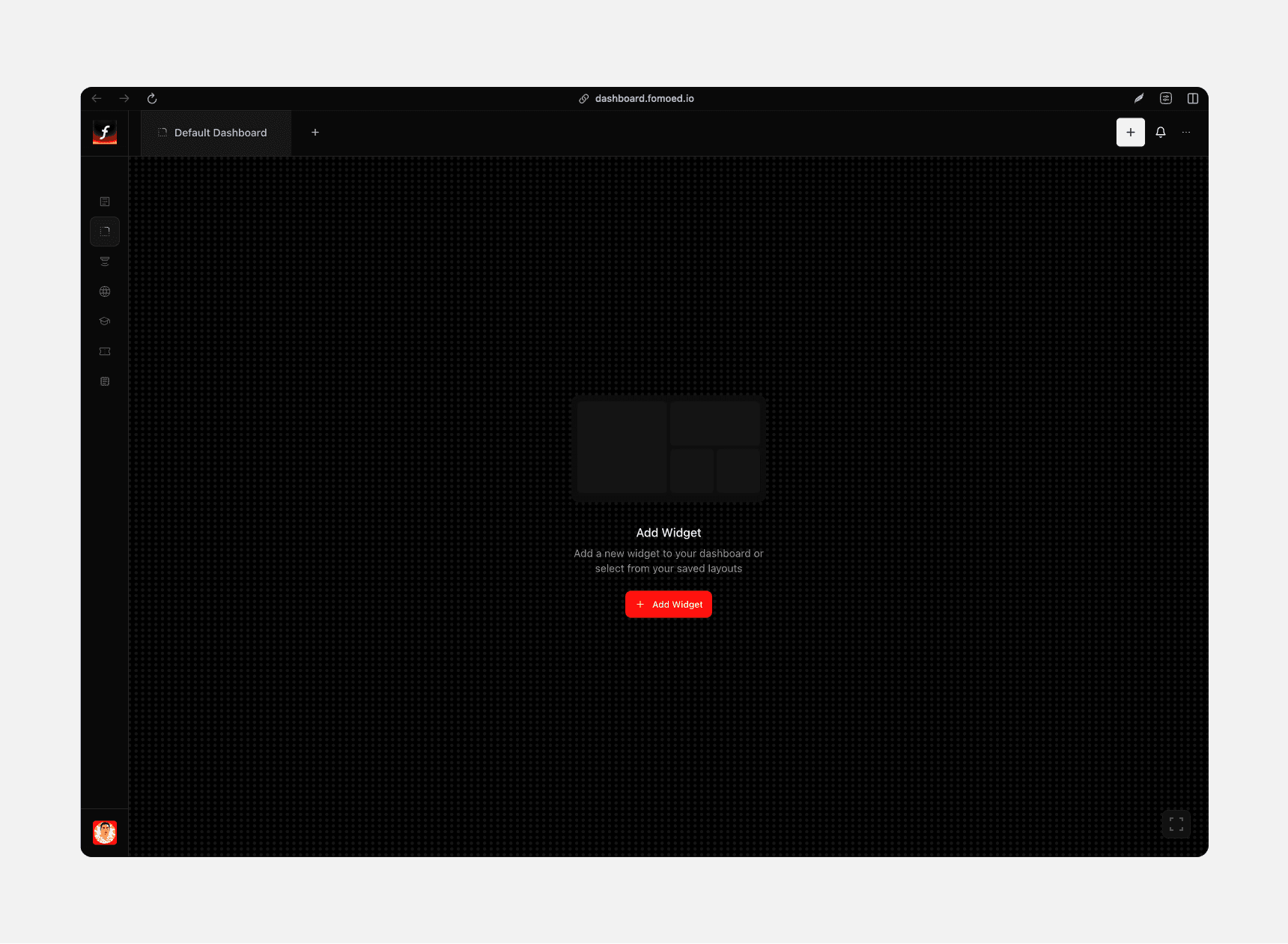
I worked with the Fomoed team to design a customizable trading dashboard that brings everything a trader needs into one unified interface. The product allows users to add and arrange widgets for candlestick charts, trending tokens, volume metrics, sentiment feeds, and news, all within a single screen. No more tab-hopping or tool fatigue. The interface was crafted to be modular and fast, giving traders the flexibility to create workflows that matched their strategy. We also designed a layout-sharing feature that allows top traders to publish and share their widget setups, making it easier for others to learn from and replicate successful strategies. The result is a trading tool that feels personal, powerful, and community-driven.
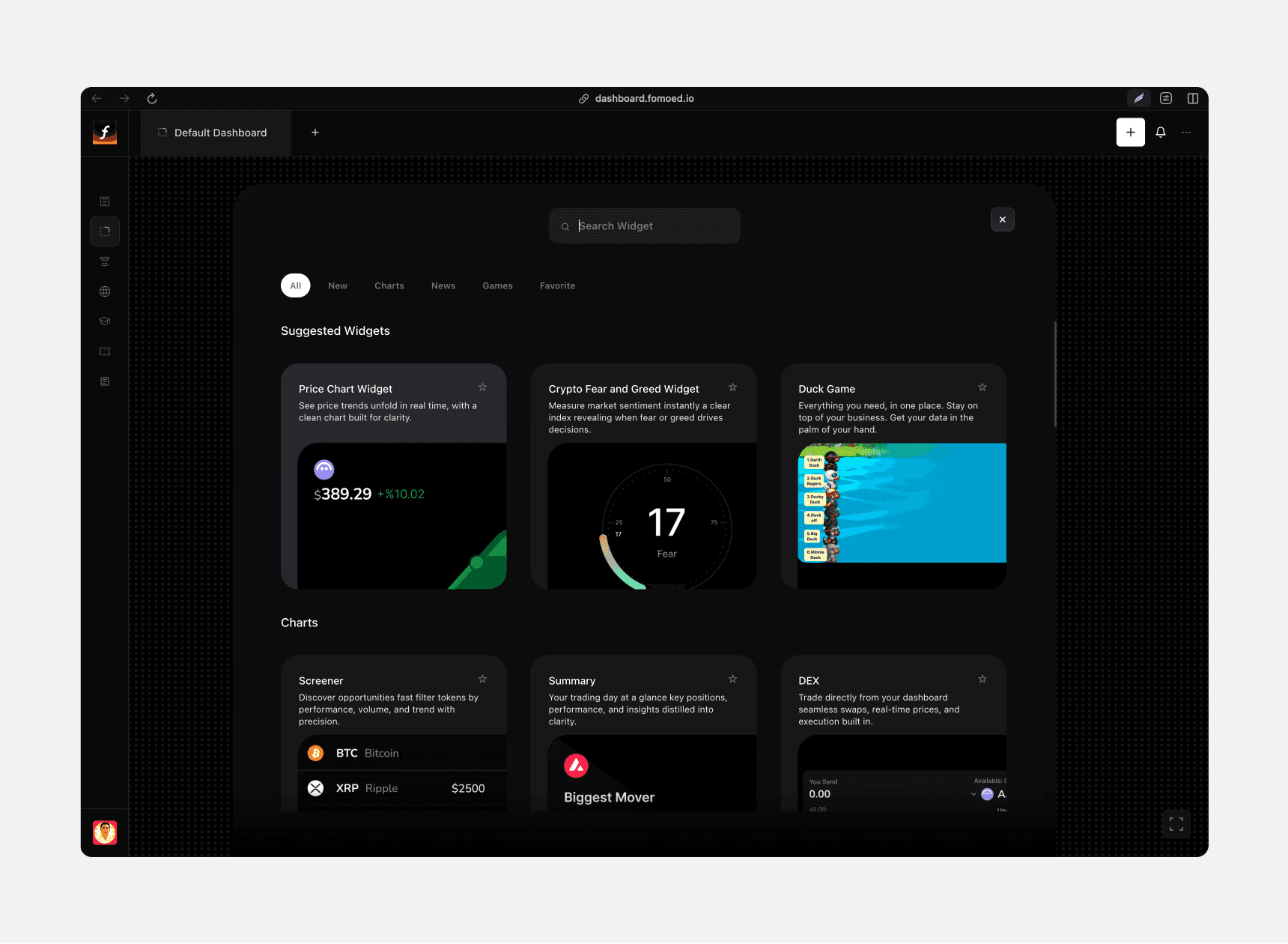
Widgets Suite
We designed a suite of widgets to support every type of trader and every moment in their workflow: from spotting hype to confirming market strength to scanning news. By covering all major use cases in one dashboard, traders could react faster, make clearer decisions, and ultimately place more confident trades.
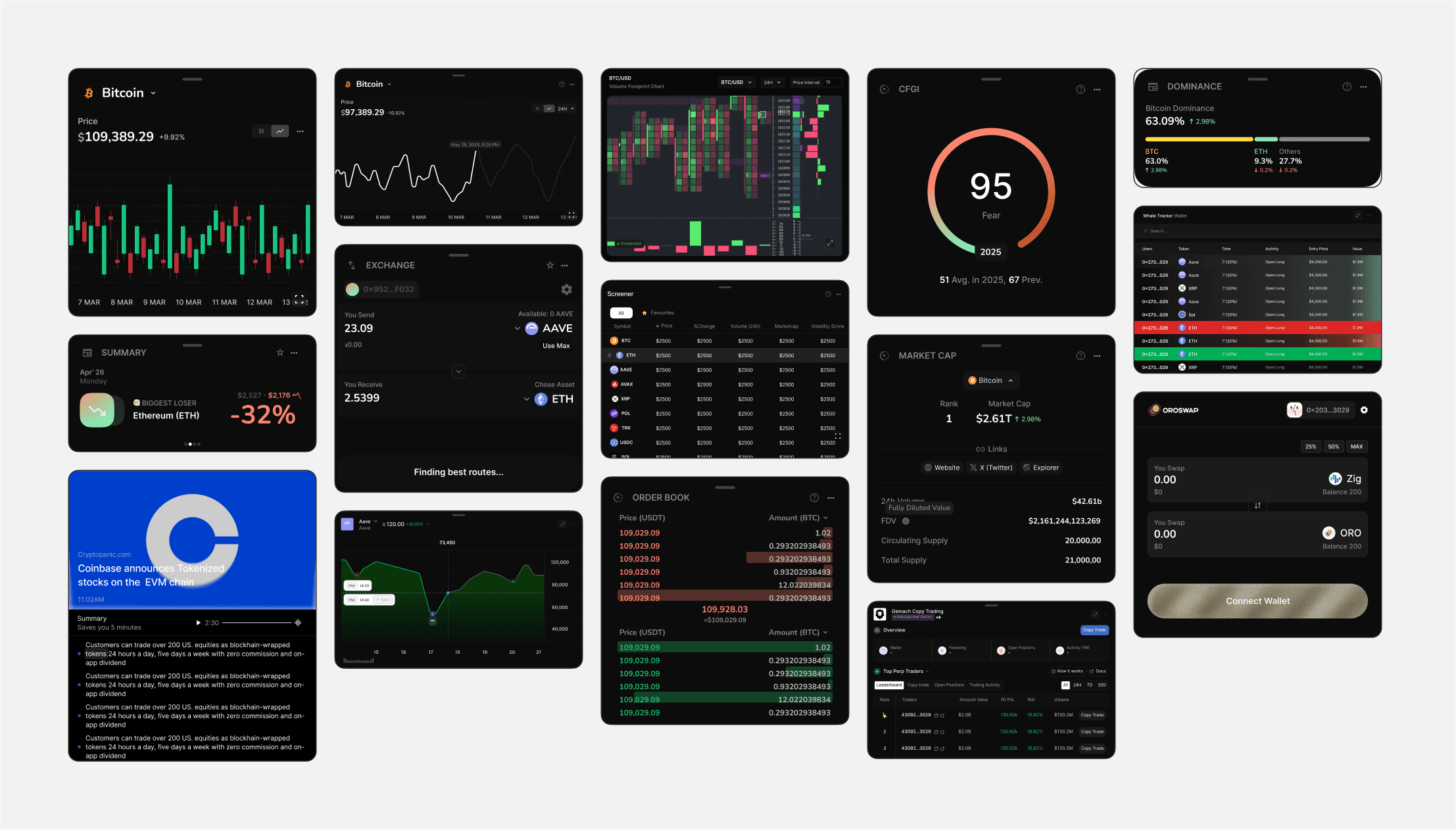
Market Performance Widgets
To give traders instant clarity on price movement, liquidity, and overall asset strength without switching tools. ⚫︎ Price Chart (Candlesticks): Core widget. Expandable to a full TradingView terminal with technical indicators, drawing tools, and multi-timeframe support. ⚫︎ Order Book & Market Depth: Designed with color-coded buy/sell walls for fast scanability. Research: traders flagged order books as critical for spotting whale activity. ⚫︎ Volume & Market Cap Widget: Snapshot view with sparkline charts.
Sentiment & Signals Widgets
We built sentiment-driven widgets that helped traders read the market’s mood at a glance. ⚫︎ Fear & Greed Index: Redesigned as a gauge visualization with historical context. Backed by user interviews → traders valued a quick-glance “market mood.” ⚫︎ News Feed Widget: Curated market news. Expandable into a full news feed with filters (e.g., DeFi, NFTs).
Platform-Level Features
Beyond individual widgets, we designed for workflow flexibility:
Expandable Widgets
Widgets are designed with an expandable state, allowing traders to zoom in when they need deeper detail. With one tap, charts become full trading terminals, news cards open into full feeds, and order books expand into multi-exchange depth views: giving traders full clarity without breaking their flow.
Impacts and results
Higher user satisfaction and longer session times
The new dashboard made it easier for users to see what mattered quickly. Traders reported that they could make decisions faster, and the internal team was able to repurpose components across other parts of the product. It laid a strong foundation for future features and better performance monitoring.
What I learnt
Lessons in Modularity and Collaboration
I learned that personalization is key: traders need dashboards that adapt to their workflows rather than a one-size-fits-all layout. Expandable, modular designs allow users to switch between quick overviews and detailed analysis seamlessly. Collaborating closely with design and brand teams highlighted the importance of design system maturity for maintaining consistency while iterating quickly.
Team Members
I worked with
1 Lead Designer – Drove the overarching UX direction and prioritization. 1 Brand Designer – Owned consistency with the Fomoed design system. My Role (Co-Designer) – ● Owned design for specific widgets (fear & greed, Dex , news feed) ● Explored and documented expandable widget interactions. ● Worked with engineers on widget state behavior and handoff specs. ● Collaborated with PM to balance widget scope with dev feasibility. ● Research on the trading workflows of different trader types… ultimately deciding the widgets to prioritize